
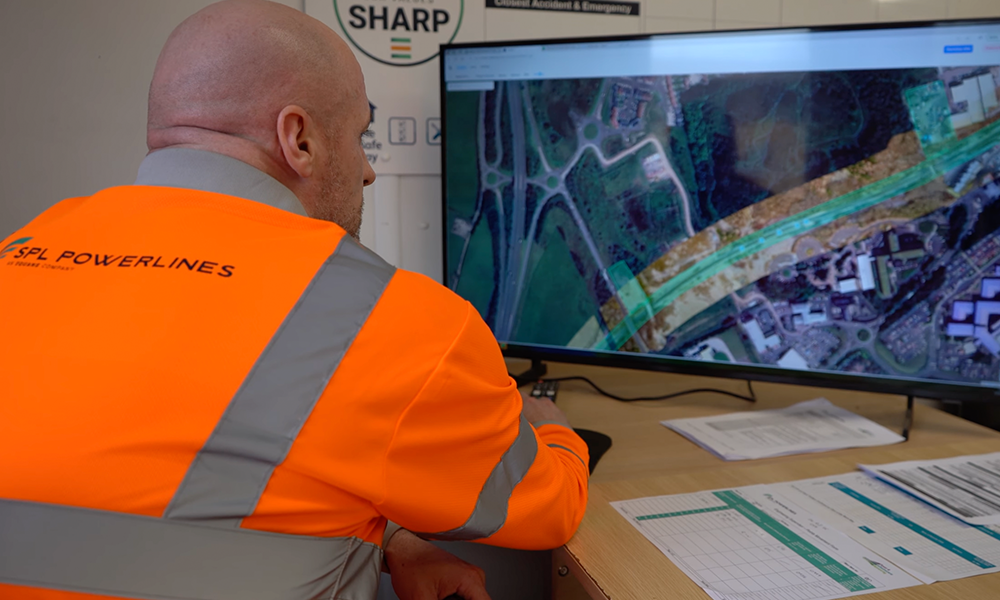


Often managing large, complex, and fast-moving worksites, ESs are responsible for coordinating multiple teams, plant, and machines while ensuring that work is delivered safely and efficiently.
The cognitive load involved in this role can be significant. ESs must maintain situational awareness across the entire worksite while making safety-critical decisions, often under time pressure and in challenging environments.
In its Engineering Supervisor’s Handbook, The Rail Safety and Standards Board (RSSB) describes the ES as the individual responsible for the safety and operational monitoring of a railway worksite. Acting as both a safety lead and a coordinator for all engineering activity, the ES holds overall authority for the site and is accountable for four primary responsibilities:
1. Set up the worksite safely, including:
- Placing worksite marker boards safely
- Ensuring the worksite is properly granted before any work starts
2. Protect teams working within the worksite, including:
- Giving effective briefings to teams so they know the safe system of work
- Ensuring teams do not exit the safe boundaries of the worksite and towards open lines
3. Maintain control of all plant and machine movements, including:
- Ensuring plant and machines do not speed or exit the the worksite
- Putting systems in place to avoid points run throughs
4. Handback the railway safely, including
- Removing worksite marker boards safely
- Ensuring the worksite is properly handed back after works, and lines are fit for operational service
Traditionally, these responsibilities are managed using a combination of paper plans, diagrams, briefings, radio communication and visual checks on site. These approaches remain fundamental to railway safety. However, in recent years, digital technologies have begun to be explored as ways of supporting situational awareness, reducing complexity, and providing additional information to supervisors.
One example of this is geofencing technology.
Setting up the worksite safely
Correctly establishing the limits of a worksite is fundamental to everything that follows. The ES must confirm worksite limits with the PICOP, ensure the worksite is granted, and confirm that marker boards are positioned accurately before work begins.
Geofencing supports this by allowing the ES to digitally define the worksite limits in advance, creating a clear virtual boundary that mirrors the physical site. When used alongside traditional protection arrangements, this can provide an additional visual representation of the site layout and, by attaching geofencing devices to marker boards, also allows the ES to confirm protection has been placed in the right location.
In a recent deviation to the rulebook by the RSSB, worksites with on-track plant (OTP) in OTP only possessions can operate without physical marker boards. Instead, geofencing devices can be placed inside the cabs of OTP and configured to alert operators when they advance towards the defined worksite limits.
This approach is referred to as Virtual Worksite Marker Boards (VWSMBs). Applying geofencing in this way removes the risk to people placing boards, removes the possibility of boards being positioned incorrectly, and reduces the time required to set up a worksite. Once the ES receives confirmation from the PICOP, they are able to ‘start the site’ with the click of a button.

Protecting teams working within the worksite
Once work is underway, protecting staff on the ground becomes one of the ES’s most important responsibilities. Clear briefings are essential to ensure everyone understands:
- The limits of the worksite
- Access and egress points
- Any nearby hazards, including open lines
On large or unfamiliar worksites, it can sometimes be difficult for teams to visualise the full layout of the site.
Geofencing systems can provide a visual map of the worksite layout to support this helping teams better understand the boundaries of the safe working area during briefings, particularly where multiple access points or work zones are involved.
Additionally, geofencing devices attached to teams on the ground will alert anyone should they exit the safe boundaries of the worksite towards hazards such as open lines, indicating they should move back to safety. This immediate feedback helps reduce the risk of accidents, reinforces the briefing instructions, and supports ES in helping to keep teams safe when operating onsite.
Maintaining control of plant and machine movements
Managing plant, machinery, and engineering trains is one of the most demanding aspects of the ES role, particularly on large possessions involving a large amount of OTP or Train movements.
ESs must have awareness of vehicle movements on site, ensuring these movements are safely managed and all teams are kept safe. Traditionally, this awareness relies heavily on two-way communication and coordination between teams.
With geofencing, every vehicle can be assigned a geofencing device, giving the ES complete visibility of their movements in real time on the Dashboard. This helps the ES quickly spot potential unsafe events early, manage movements more effectively, and reduce risks.
Rather than relying on multiple calls and updates, the ES can see what is happening across the site at a glance, reducing workload while improving control.

Handing back the railway safely
At the end of the shift, the ES is responsible for handing the railway back safely. This includes ensuring all personnel, equipment, and plant and machinery are clear, and confirming that the worksite is correctly returned to the PICOP. This process requires careful verification to confirm that nothing remains within the worksite limits.
Geofencing simplifies this process by showing a complete live view of the site, confirming that all machines and teams are accounted for and no one is near open lines.
If the ES were to try and close the site with anything still on track, the geofencing system would provide an alert to indicate that the line is not yet clear, so that the ES can intervene. By assisting with the line clear verification (LCV) process in this way, geofencing helps ensure the railway is handed back safely and efficiently, completing the ES’s responsibilities with confidence.
And if VWSMBs are used, the ES can stop the virtual worksite with the click of a button to verify the site handback digitally. Not only does this enhance site safety by not having to collect boards, but it also speeds up the handback process to minimise any potential possession overruns.
Making the ES role safer and more manageable
The role of the ES requires constant awareness, coordination and decision-making. As worksites grow larger and more complex, maintaining visibility of everything happening across the site can be challenging.
Digital technologies such as geofencing are increasingly being explored across the rail industry as a way of supporting supervisors with additional information about site safety.
Rather than replacing traditional safety processes, these tools aim to complement them by providing visualisation and alerts that help supervisors maintain situational awareness of their worksite.
For ESs responsible for coordinating multiple teams and machines, improved visibility of worksite activity can contribute to clearer decision-making and enhanced confidence when managing safety-critical operations.


