
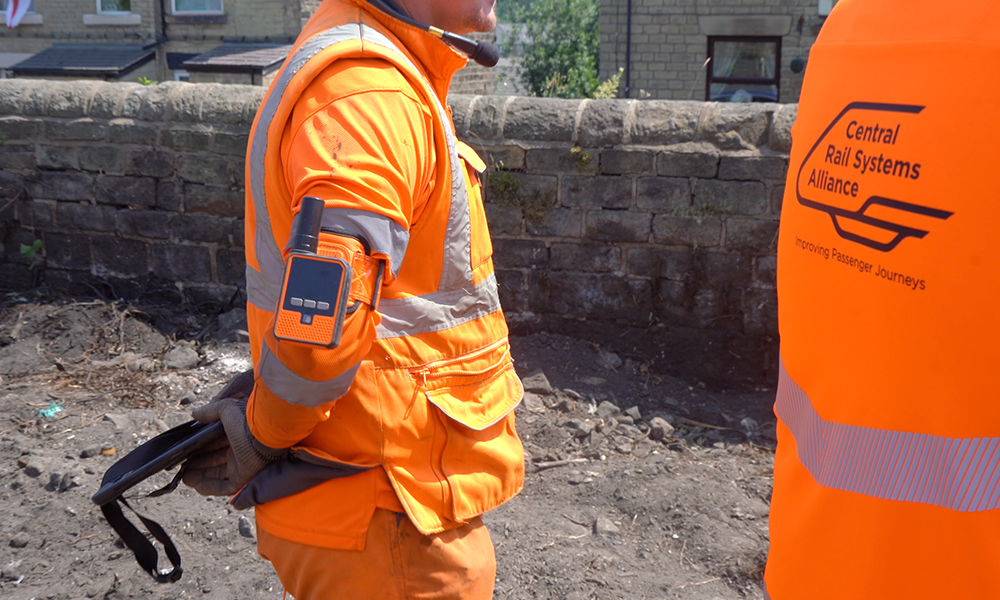



One of the UK's most ambitious and high-profile rail infrastructure programmes in the UK, Transpennine Route Upgrade (TRU), has deployed Tended's geofencing technology across an initial trial with TRU Central at Stalybridge, Manchester. This marks a significant step in how one of Britain's most important railway improvements is managing worksite safety and operational efficiency.
About TRU
TRU is a multi-billion-pound programme transforming the main line between Manchester, Huddersfield, Leeds and York. When complete, it will deliver faster journeys (41–42 minutes between Manchester and Leeds) alongside a fully electrified route expected to save over 87,000 tonnes of carbon emissions each year. More frequent services, improved stations, and a more reliable railway for millions of passengers across the North of England depend on this programme being delivered on time and to the highest standards.
This requirement places enormous pressure on the teams carrying out the engineering works. Possessions are tightly scheduled, worksites can be complex, and the consequences of delays or safety incidents can have significant impact on project timelines as well as its safe and efficient delivery. Getting worksite management right directly affects both the train operators and commuters who depend on the Transpennine line every day.
How geofencing is supporting the programme
TRU Central's geofencing deployment has been helping to address these challenges. Beginning in Stalybridge, the technology was implemented across a range of use cases to enhance efficiency and reduce risk.
Geofencing works by creating virtual boundaries around worksites and then using small attachable devices to provide alerts the moment a geofence boundary is crossed. The devices also provide a live location to the Engineering Supervisor (ES) when attached to plant and equipment, an application referred to as geotagging.
Initially, the deployment has focused on this geotagging application, where Tended’s devices were attached to plant, machines and trolleys to give the ES enhanced, real-time visibility of onsite movements. Alerts for unsafe activity such as exiting the boundaries of the worksite also allow the ES to intervene quickly, reducing the risk of incidents onsite.
The system has also been supporting scenarios where teams are working separated. Here, the technology has been used to help TRU’s workers maintain a safe distance from the adjacent open lines, where devices worn by team members are configured to instantly alert the moment they exit the pre-defined boundaries of their safe zones. This helps to enhance situational awareness and reduce their exposure to risk.
TRU's implementation of geofencing is the latest in a growing series of deployments across Network Rail routes and principal contractors. As the technology’s benefits become more widely evidenced, the adoption of geofencing is accelerating across the railway industry, becoming a fundamental part of how modern railway projects are managed. Next steps involve engaging with TRU to discuss future deployments.


