Network Rail East Coast trials virtual worksite marker boards
Background
As part of its ongoing commitment to enhancing safety and operational efficiency across the eastern region, Network Rail East Coast conducted a trial of Tended’s Virtual Worksite Marker Board (VWSMB) solution with the maintenance team based at Doncaster DU.
Solution
The trial took place on the East Coast Mainline at Doncaster across an eight-mile possession. The worksite was taken by Permanent Way (P-Way) teams and managed by their Engineering Supervisor (ES). Involvement from Overhead Line (OHL) teams and their on-track plant (OTP) meant that collaboration across the two sections was required to enable the VWSMB deployment.
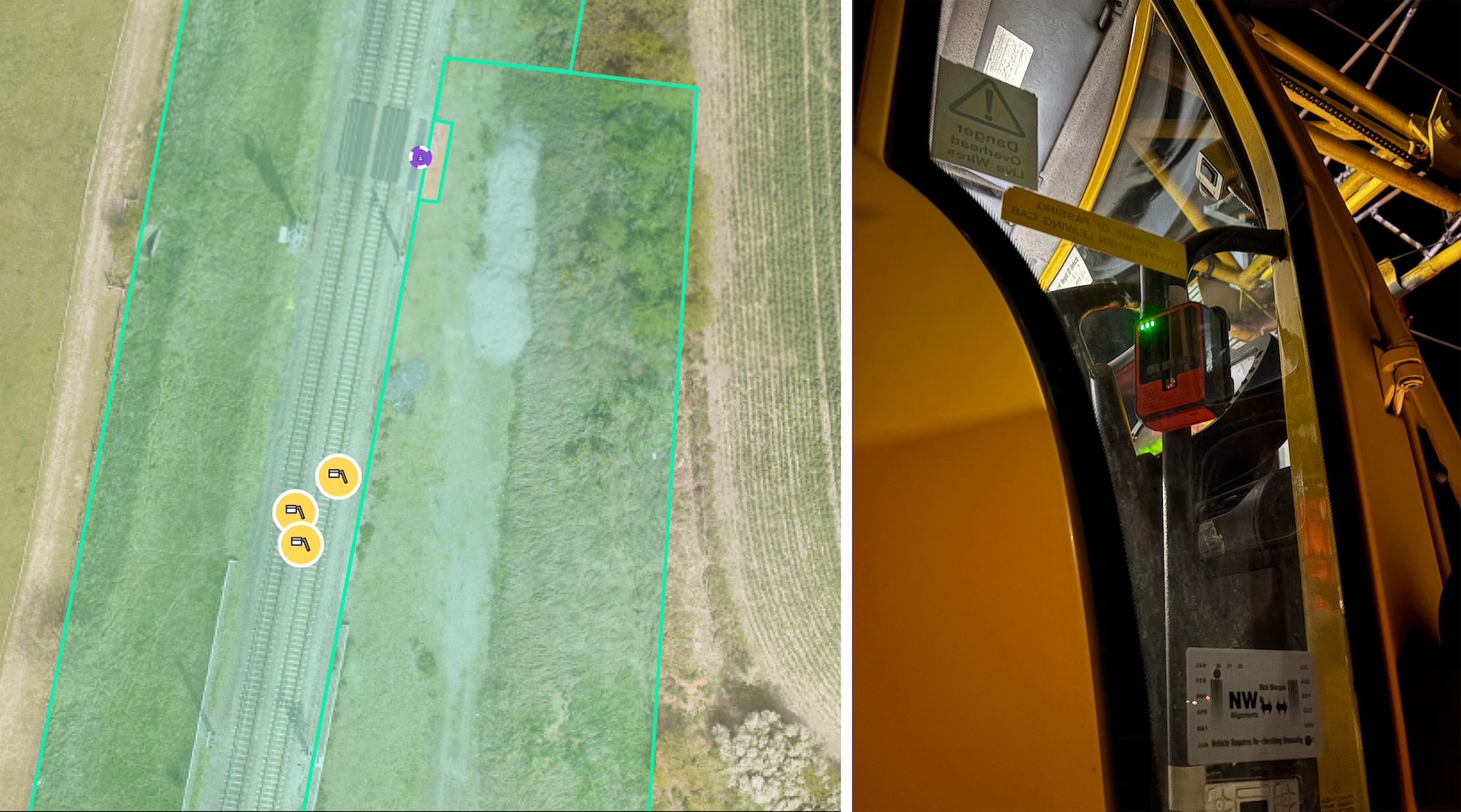
Instead of physical marker boards, virtual boundaries were set up. OTP was equipped with geofencing devices which would alert if they crossed the worksite boundary.
To ensure frictionless deployment, Tended provided a live demonstration of the system, and the use of VWSMB was covered in the briefing, ensuring full understanding and engagement from all involved.
Results
By removing the need to place physical marker boards once the possession was granted, VWSMB enabled teams to begin their works much sooner. The possession was granted early Monday morning, and teams were able to be deployed on site within just two minutes as the VWSMB boundaries could be activated instantly at the click of a button.
Typically, teams would have to wait while physical marker boards were placed at the worksite limits. This process can consume valuable possession time and introduce risk, particularly if boards are misplaced or teams become disorientated.
Once the VWSMB limits were set live, all devices automatically updated with the worksite boundaries. This would alert machine operators and controllers if they crossed the boundary to support them with locational awareness.
Had physical marker boards been required, their placement would have taken approximately 20 minutes to place. By eliminating this step, the trial not only created additional productive time within the available possession window, but it also freed up limited Network Rail maintenance resources, allowing teams to focus on their core tasks rather than placing boards.
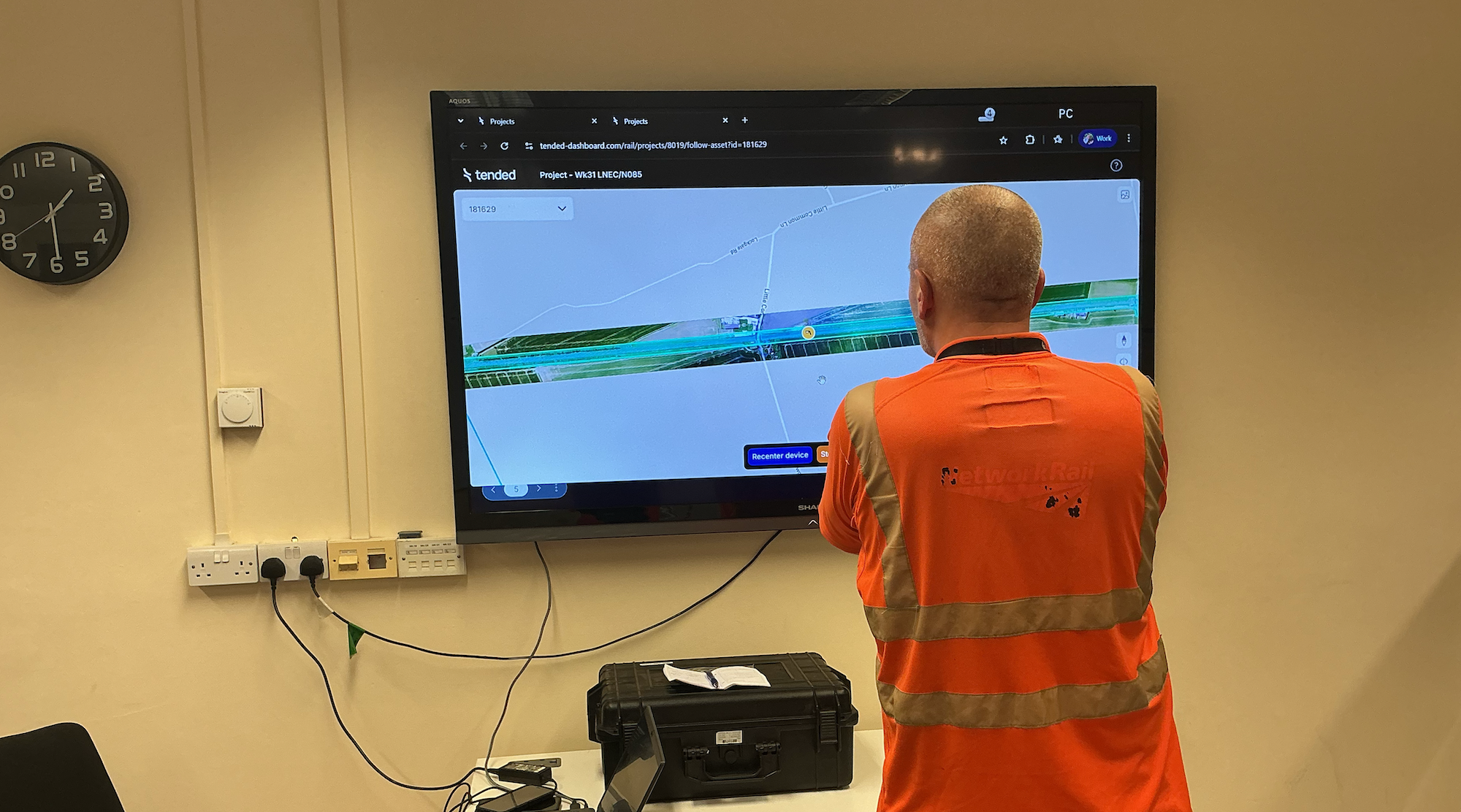
Additional benefits of the system included the enhanced visibility for the ES. Using the Dashboard’s live view, the ES could monitor the worksite and live OTP movements, confirming line access and reducing the risk of human error or confusion.
The system also eliminated 12 phone calls (typically lasting two minutes each) between the ES and staff placing boards to confirm they had been placed at the worksite limits. As well as enabling the ES to focus on other responsibilities, being able to view OTP movements aided them in avoiding any confliction inside the worksite where maintenance teams need to be flexible to deliver priority work.
At the end of the shift, it took just eight minutes to take down the worksite, which included handing four level crossings back to signaller control, checking with the signaller that none of the track circuits were showing as occupied, and confirming the last teams had finished their work and were clear of the line. If physical boards needed to be recovered, this process would have taken an estimated extra 25 minutes.
Overall, the use of VWSMB during the trial delivered an estimated time saving of 45 minutes, equating to around 17% of the total 4-hour 25-minute possession window, significantly increasing the productive working time available.
Mick Woodward, Engineering Supervisor at Network Rail East Coast said:“This system is spot on. Using VWSMB on the Sunday night gave us more time, made life easier for everyone, and gave me more control over the safety of the worksite. You no longer need to rely on people’s word that they have understood or will do what they told you, instead you can make sure everything is done safely. I am really looking forward to using this regularly, especially in more complicated worksites, and when this is put together with things like T3A and D.”

.jpg)